
Midlife health · Toronto, Ontario

Menopause and perimenopause

Menopause is a life transition that can affect bleeding patterns, temperature regulation, sleep, mood, sexual health, urinary symptoms, bone health and cardiovascular risk. A respectful visit can focus on the symptoms and goals that matter to you.

Clinically reviewed by Dr. Eduardo Jacques · 20 November 2026

General information only · No diagnosis

A woman with greying hair in a teal coat on a leafy street lined with red-brick houses.

Understanding the transition

Perimenopause is the months or years when menstrual cycles and ovarian hormone patterns are changing. Menopause is a point in time, defined retrospectively as 12 consecutive months without a menstrual period when another explanation is not more likely. Postmenopause is the time after that point.

Perimenopause, menopause and postmenopause

  1. Perimenopause

    Periods may change as you approach menopause.

  2. Menopause

    12 months without a period, when there is no other likely explanation.

  3. Postmenopause

    The years after menopause. Some symptoms can continue.

Symptoms can begin before the final menstrual period and may continue afterward. Timing varies from person to person. Ontario Health menopause quality standard

Symptoms deserve care

Hot flashes, sleep disruption, mood changes, pain with sex or urinary symptoms can affect work, relationships and wellbeing. You do not need to wait for symptoms to become severe before asking for support.

Inclusive, anatomy-based language

People with ovaries, including women, trans men and non-binary people, may experience menopause. Care should reflect anatomy, goals, culture, gender identity, sexual orientation, disability and access needs.

How symptoms can show up

Symptoms vary from person to person and may be mild, severe, short-lived or persistent. A symptom can have more than one contributor.

A woman holding a mug at her kitchen table and looking out the window in the early morning.

Temperature and body

  • Hot flashes or night sweats
  • Palpitations or a sudden sense of heat
  • Headaches, joint or muscle aches
  • Changes in body composition or skin and hair

Sleep, mood and thinking

  • Trouble falling or staying asleep
  • Irritability, anxiety or low mood
  • Concentration or memory concerns
  • Fatigue linked to symptoms or poor sleep

Genitourinary and sexual health

  • Vaginal dryness, burning or irritation
  • Pain or discomfort with sex
  • Urinary urgency, discomfort or recurrent infections
  • Changes in desire, arousal or sexual confidence

Symptoms versus diagnosis. Menopause is identified from the pattern, age, menstrual history and health context. Thyroid disease, pregnancy, anemia, medication effects, depression, anxiety, sleep disorders and gynecologic conditions can look similar. A clinician decides whether examination or testing is useful.

What happens at a menopause visit

Assessment starts with your story and goals. It is not a requirement to prove that symptoms are “real” with a single hormone test.
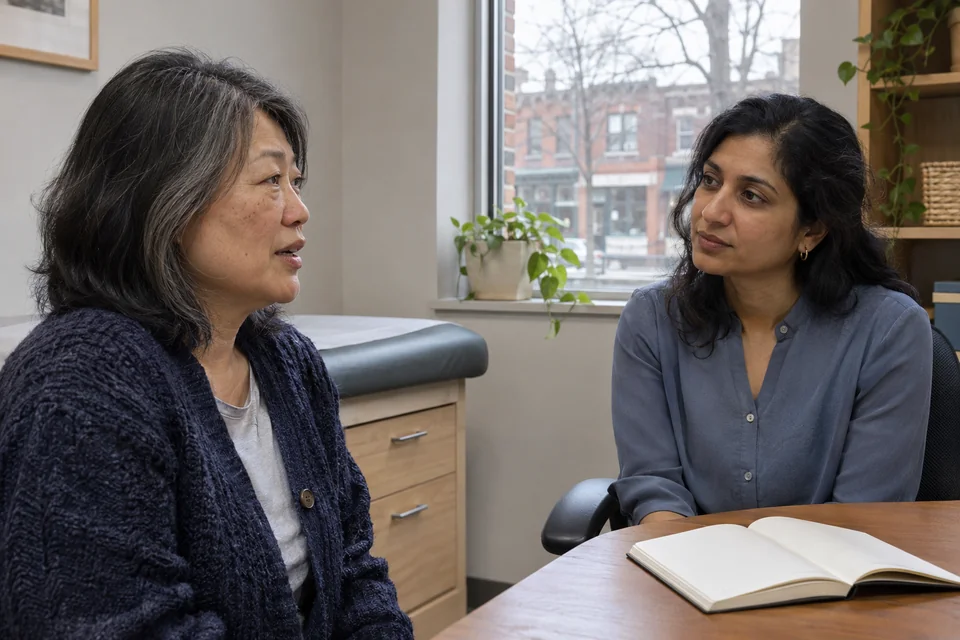
A patient and a family physician having a conversation beside a clinic window.
  1. Your story

    Cycle changes, symptom pattern, function, sleep, mood, sexual and urinary concerns.

  2. Your health history

    Age, pregnancy possibility, contraception, surgery, cancer treatment and medications.

  3. Focused exam

    Blood pressure, thyroid or pelvic assessment and other examination when clinically indicated.

  4. Shared plan

    Discuss options, risks, preferences, follow-up and referral if needed.

When tests may help

For many otherwise healthy people aged 45 or older with typical symptoms and cycle changes, routine hormone testing is not needed to identify perimenopause or menopause. Testing may be considered for younger people, premature ovarian insufficiency, pregnancy questions or another possible diagnosis.

Bleeding is part of the assessment

Cycle changes are common in perimenopause, but very heavy, persistent, between-period, after-sex or postmenopausal bleeding needs clinical assessment. Bleeding on systemic hormone therapy also has a time pattern that should be reviewed if it persists or changes.

Contraception still matters during perimenopause. Ovulation can occur before the final menstrual period. Ask about options that fit your health history and pregnancy goals.

Causes, contributors and related conditions

The menopause transition is a normal biological process, but earlier or sudden menopause can have medical causes or treatment-related contributors.

Life-stage and treatment-related contributors

  • Natural perimenopause and menopause
  • Surgical removal of both ovaries
  • Chemotherapy, pelvic radiation or other cancer treatment
  • Premature ovarian insufficiency before age 40
  • Early menopause between ages 40 and 44
  • Some genetic, autoimmune or lifelong conditions

Conditions that can overlap

  • Pregnancy or changes in contraception
  • Thyroid disease or anemia
  • Sleep apnea, chronic pain or medication effects
  • Depression, anxiety or substance use
  • Fibroids, polyps or other causes of abnormal bleeding
  • Cardiovascular, metabolic or bone-health concerns

Life stages and health context

Early menopause and premature ovarian insufficiency

Symptoms before age 45, and especially before 40, deserve assessment. Earlier loss of ovarian function can affect fertility, bone health, cardiovascular health and emotional wellbeing. Specialist input may be useful.

Pregnancy, fertility and contraception

Pregnancy remains possible during perimenopause. If menopause follows surgery or medical treatment, fertility and contraception conversations should happen before and after treatment when relevant.

Older adults and postmenopause

Bone, cardiovascular, urinary and sexual health remain important after the final period. New symptoms later in life should not automatically be attributed to menopause.

Mental health, sleep and substances

Sleep loss can intensify mood and concentration symptoms. Ask about depression, anxiety, trauma, alcohol, nicotine, cannabis and other substances in a non-judgmental conversation.

Practical strategies and treatment options

There is no single menopause plan. Options depend on symptoms, goals, medical history, contraindications, preferences and access.

Two women walking together beside Lake Ontario with the Toronto skyline in the distance.

Daily supports

  • Layering, cooling strategies and a comfortable sleep environment
  • Regular activity that supports muscle strength, balance and bone health
  • Nutrition, calcium and vitamin D discussions when relevant
  • Smoking cessation and lower alcohol intake when desired
  • Lubricants, moisturizers and pelvic-floor support for genitourinary symptoms

Hormone therapy as a discussion topic

Canadian guidance describes menopausal hormone therapy as the most effective option for bothersome vasomotor symptoms for people without contraindications. The route, estrogen-only versus combined therapy, duration and monitoring are individualized. This page does not recommend treatment for any person.

Non-hormonal options

Depending on the symptom and health context, clinicians may discuss menopause-specific cognitive behavioural therapy, selected antidepressant classes, gabapentinoids or other non-hormonal medicines. Supplements and compounded hormones are not automatically safer or more effective.

Genitourinary and sexual health

Vaginal moisturizers, lubricants, pelvic-floor physiotherapy and local vaginal hormone options may be discussed. A personal history of breast cancer or other hormone-sensitive conditions changes the conversation and may require specialist input.

Bone and cardiovascular health

Menopause is a useful time to review blood pressure, diabetes and lipid risk, activity, smoking, alcohol, falls and fracture history. Hormone therapy should not be used solely to prevent cardiovascular disease or dementia.

Medication classes only. Do not start, stop or change hormones, antidepressants, gabapentinoids, bladder medicines, supplements or contraception based on this page. A clinician or pharmacist can review interactions, contraindications and monitoring.

When to seek urgent help

  • Medical emergency

    Call 911

    Or go to an emergency department.

  • Bleeding after menopause

    Contact your clinician about any bleeding after 12 months without a period.

  • Non-emergency advice

    Call Health811 at 811

    Ontario nurse advice and service navigation.

Bleeding or pelvic warning signs

  • Soaking through pads or tampons rapidly, or bleeding with dizziness, fainting or weakness
  • Bleeding after 12 months without a period
  • Bleeding after sex, persistent between-period bleeding or a major change in pattern
  • Severe pelvic pain, fever, vomiting or feeling acutely unwell

Other urgent symptoms

  • Chest pain, severe shortness of breath, fainting or new neurologic symptoms
  • One-sided leg swelling or pain with chest symptoms or breathlessness
  • A severe headache or vision change with very high blood pressure symptoms
  • Thoughts of suicide, immediate safety concerns or inability to stay safe

This page cannot assess urgency for you.

Watch and learn

Short videos from hospitals and health organizations I trust. Watch at your own pace, and bring your questions to your next visit.

Video thumbnail for Women's Health Forum - "Menopause" with Dr. Jennifer Blake

Women's Health Forum - "Menopause" with Dr. Jennifer Blake

Society of Obstetricians and Gynaecologists of Canada Canadian source

Video

A Canadian specialist discusses menopause at a public women's health forum.

Watch on YouTube
Video thumbnail for What Is Menopause?

What Is Menopause?

U.S. National Institute on Aging U.S. source

Short video

Explains when the menopause transition begins, how long it lasts and what comes after.

Watch on YouTube

These videos are for general education and do not replace advice from your own doctor. If you have urgent symptoms, call 911 or go to the nearest emergency department.

What to bring to your visit

Symptoms and medical history

  • A private symptom timeline: hot flashes, sleep, mood, pain, urinary and sexual symptoms
  • Period dates, flow changes, bleeding after sex or bleeding after a year without periods
  • Medication, supplement, contraception and allergy list
  • Pregnancy, fertility, surgery, cancer treatment and menopause timing

Goals and access needs

  • Blood pressure, fracture or family-history questions you want to discuss
  • What you have tried and what helped or caused side effects
  • One or two goals for the appointment
  • Interpreter, accessibility, cultural-safety or support-person needs
An open notebook, pen and reading glasses on a table by a window.
Private visit checklist

Selections reset when you reload the page. Keep any personal notes with you.

Print the symptom and bleeding tracker (PDF)

Questions to ask Dr. Eduardo Jacques

  • Could my symptoms have a menopause-related and a non-menopause explanation?
  • Do my cycle pattern and age fit perimenopause or another cause?
  • Do I need an examination or testing, and what question would it answer?
  • How should we evaluate bleeding, pregnancy possibility or contraception needs?
  • Could thyroid disease, anemia, sleep or mood be contributing?
  • Which hormone and non-hormone options should we discuss, and what are the relevant risks?
  • If I have a uterus, what endometrial protection would be needed with systemic estrogen?
  • What would change the plan if I have migraine, blood-clot risk, cardiovascular disease or cancer history?
  • How can we support sleep, mood, urinary symptoms, sexual health or bone health?
  • When would a menopause specialist, gynecology, endocrinology or pelvic-floor referral help?

Care and coverage in Ontario

Eligibility, referral requirements, wait times and fees vary. Confirm the exact service directly with the clinic, hospital, laboratory, pharmacist or program.

What OHIP-insured care may include

OHIP generally covers medically necessary insured physician services and insured hospital services. A menopause assessment may include a primary-care visit, clinically indicated examination or referral. Coverage depends on the specific service, setting and eligibility.

What may be outside OHIP

Private menopause consultations, some allied-health services such as pelvic-floor physiotherapy, counselling, supplements, forms, devices and services outside insured physician or hospital care may be privately paid, employer-insured or program-dependent. Do not assume a service is covered.

Medication pathways

Prescription medicines outside hospital are generally not covered by OHIP. Ontario Drug Benefit, OHIP+, Trillium, Exceptional Access and private plans have different eligibility and formulary rules. Ask a pharmacist to confirm the current pathway and fees.

Printable resources

These original PDFs were clinically reviewed for publication. They include selectable text, source links, version information and no PHI fields, uploads or storage.

Patient education guideMenopause stages, symptoms, assessment, options and safety-netting.
Clinically reviewed · v1.0
Questions for a clinicianPrompt sheet for bleeding, hormone therapy, sleep, sexual health and bone health.
Clinically reviewed · v1.0
Symptom and bleeding trackerPrivate, non-PHI worksheet for dates, symptoms and questions.
Clinically reviewed · v1.0
Ontario and Toronto resourcesCoverage, Health811 and referral-navigation prompts.
Clinically reviewed · v1.0
Topic reference guideCanadian-first source map, terminology and limitations.
Clinically reviewed · v1.0

Trusted sources

Canadian and Ontario sources are listed first. U.S., UK and academic references supplement them. Every listed source was opened or directly attempted and verified on 20 November 2026; access status and limitations are recorded in the research files.

Ontario Health / SOGC · Menopause: Care for Women and Gender-Diverse PeopleCanada · Provincial quality standard · Ontario identification, evidence-based options and referral expectations.
Society of Obstetricians and Gynaecologists of Canada · Menopause ToolCanada · Professional clinical tool · Menstrual history, symptom assessment, bone, cardiovascular and sexual-health prompts.
Canadian Menopause Society · Pocket Guide: Menopause ManagementCanada · Professional pocket guide · Canadian comparison of MHT timing, indications and risk discussions.
Osteoporosis Canada · Menopause and Bone HealthCanada · Recognized patient education · Bone loss, fracture-risk discussion and activity considerations.
Government of Canada / Directorate of Women and Diversity Health · The Women and Diversity Health Guide to: MenopauseCanada · Government patient education · Definitions, symptom spectrum, contraception, bleeding and supplement cautions.
Government of Canada / Directorate of Women and Diversity Health · Medical Management of Menopause SymptomsCanada · Clinician practice support · Assessment, contraindication prompts and hormone versus non-hormone discussion.
HealthLink BC · Post-menopauseCanada · Government patient education · Post-menopause definitions, bone health and early menopause context.
Women’s College Hospital · Menopause ClinicCanada · Hospital clinic information · Toronto referral and eligibility navigation.
The Menopause Society · Menopause Topics: Hormone TherapyUnited States · Recognized patient education · Benefits, adverse effects, contraindications and compounded-hormone cautions.
The Menopause Society · Position Statements: hormone, nonhormone, osteoporosis and genitourinary careUnited States · Professional position statements · Comparison of non-hormone, hormone, bone and genitourinary evidence.
National Institute for Health and Care Excellence · Menopause: identification and management (NG23)United Kingdom · Clinical guideline · Diagnosis without routine laboratory testing in many people 45+, HRT discussions, CBT, bleeding and referral.
National Health Service · Treatment for menopause and perimenopauseUnited Kingdom · Government patient education · Hormone, vaginal, non-hormone and supplement discussion topics.
Endotext / NCBI Bookshelf · The Postmenopausal WomenUnited States · Recognized medical textbook chapter · Background physiology, vasomotor symptoms, cardiovascular and bone-health context.

Review status

Last research verification
20 November 2026
Medical-review status
Clinically reviewed for publication
Clinical reviewer
Dr. Eduardo Jacques
Publication state
Published