


COPD and daily life

Know your usual
breathing.

Keep track of what feels usual for you and what changes with a flare-up. Find practical breathing tools and bring a short note to your next visit.

An older man pauses with one hand on a wooden rail on a leafy trail

Quick breathlessness tools

Pause and get comfortable.

Try one tool for the breathlessness you know from everyday activity. If you’re more short of breath than usual, go to the flare-up steps.

Stop and support your arms.

Sit on a sturdy chair with both feet on the floor. Lean slightly forward and rest your forearms on your thighs or a table. Let your shoulders relax as you breathe gently.

An older adult rests on a park bench, leaning slightly forward with both feet on the ground

Try pursed-lip breathing.

Breathe gently in through your nose. Bring your lips together as if cooling a hot drink. Let the air out gently and a little longer than you breathed in.

If it feels comfortable, try two counts in and four out. Return to easy breathing if counting feels like work.

Breathe out as you make the effort.

Breathe out as you stand up or step up a stair. Pause between steps or do one part of a chore at a time. Let your breathing settle before you continue.

Practise when you feel well so the steps become familiar. Canadian Lung Association breathing demonstrations

What to do in a flare-up

Act early when symptoms change.

A flare-up can make breathing, coughing or bringing up mucus worse than on a usual day. Follow the steps your care team has written for you.

Emergency signs

Call 911

Call 911 for severe or quickly worsening breathlessness, trouble speaking in full sentences because of breathing, blue or grey lips, new confusion or extreme drowsiness, new or severe chest pain, collapse, or coughing up a large amount of blood.
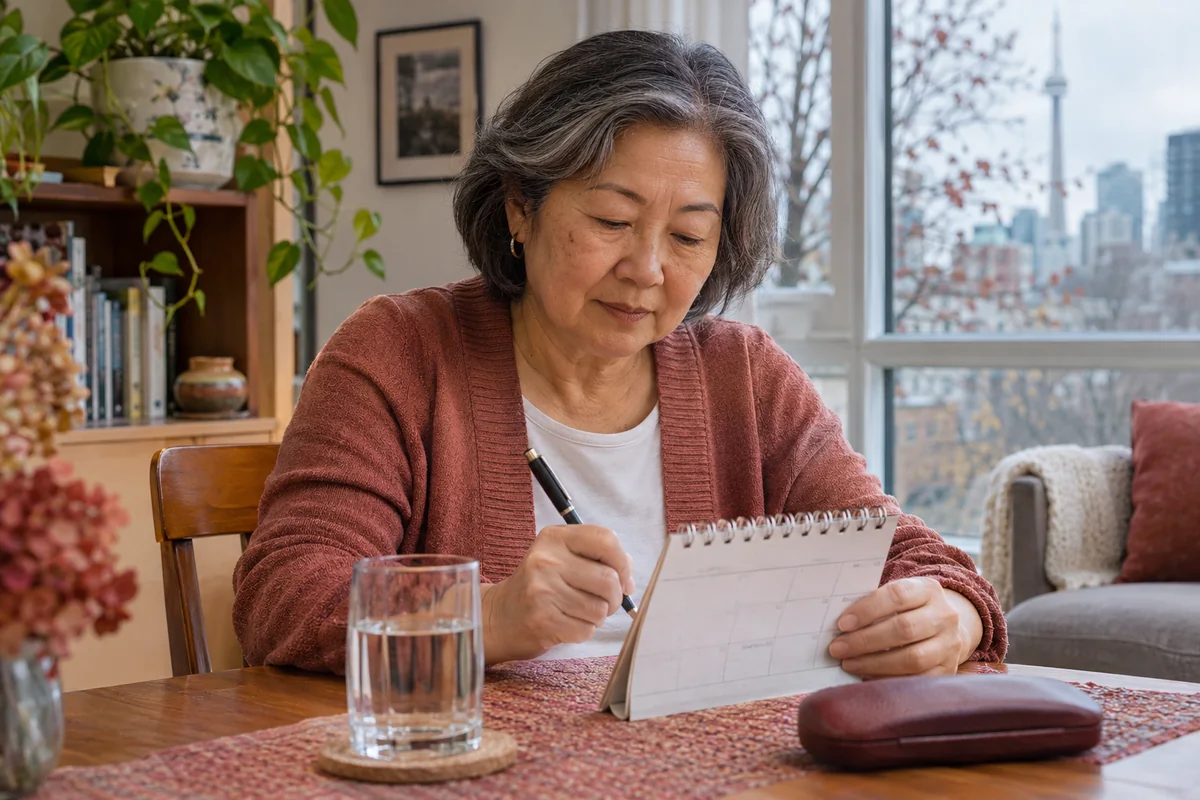
A woman writes a note on a small calendar at a table by a window

Write down what changed

Think about your breathing, cough and mucus compared with a usual day. Note any illness or exposure around the same time and what care you needed.

Build my visit note

Worse than usual? Contact your care team today.

Get advice if you’re more breathless, coughing more, using your reliever more, or bringing up more mucus or mucus that has changed colour. Fever or new swelling is also worth reporting.

Use your prescribed reliever as directed on your prescription or in your written plan. Start prednisone or antibiotics only if your clinician’s plan tells you when to use them. If you can’t reach your team, get same-day care. For non-emergency advice in Ontario, you can call 811.

When you’re at your usual

Keep up your prescribed daily inhalers. Ask your care team to write down your usual symptoms, what changes to watch for, how to use your reliever, and who to call.

If you use home oxygen, follow the flow instructions in your prescription or written plan.

Bring a blank COPD action plan to your visit (PDF)

Canadian Chronic Disease Surveillance System

New COPD diagnoses in Canada

131,360 newly identified cases among adults aged 35 and older in 2023–24.

New cases per 100,000 adults aged 35 and older
  • Canada614
  • Ontario575

Rates are adjusted for age. The Canada estimate excludes New Brunswick, where data were unavailable for this measure. See Public Health Agency of Canada data.

Daily habits

Make everyday things easier to manage.

Choose one change that helps you do something that matters, like showering, making a meal or walking to the corner.

Pair your daily inhaler with a routine

Use your maintenance inhaler as prescribed, even on a good day. Try pairing it with something you already do, like brushing your teeth. Keep your reliever where you can reach it.

Move a little and take breaks

On a usual day, start with an activity your care team says is safe for you, such as a short walk or seated movement. Split it into shorter stretches and pause before you feel worn out. Ask about supervised pulmonary rehabilitation if daily tasks are getting harder.

Save energy for what matters

Sit to get dressed or prepare food. Keep frequently used items within reach. Try smaller meals if a full plate leaves you breathless. Tell your care team if you are losing weight without trying or struggling to eat.

Reduce smoke exposure and plan for infections

Keep indoor air as smoke-free as you can. Ask which flu, COVID-19, pneumococcal and RSV vaccines fit your age and health. If you want to cut down or quit smoking, ask for help with a plan that fits your life.

Smoking and nicotine support

Ask what pulmonary rehabilitation involves.

It combines supervised exercise with education about breathing and daily activities. Ask whether you’re eligible and how to get a referral. See Toronto programs

Common COPD inhalers

Know what each inhaler does.

Bring your inhalers to a visit and ask which one is for quick relief and which ones you take every day. These are examples you may hear about in Canada.

Quick relief

Salbutamol is a common short-acting inhaler. Some people also use ipratropium. These can open the airways for a short time. Use your reliever according to your prescription or action plan.

Daily airway openers

Long-acting inhalers help keep airways open. Examples include tiotropium (a LAMA) and umeclidinium/vilanterol (Anoro Ellipta, a LAMA plus a LABA). Your team may use one or two types of long-acting medicine depending on your symptoms and flare-ups.

Daily combinations with a steroid

Trelegy Ellipta is one example. It combines fluticasone furoate (an inhaled steroid), umeclidinium and vilanterol (two long-acting airway openers). Ask whether it fits your flare-up history, and tell your clinician if you also have asthma.

Watch and learn

Short videos from hospitals and health organizations I trust. Watch at your own pace, and bring your questions to your next visit.

Video thumbnail for What is COPD?

What is COPD?

Lung Health Foundation Canadian source

Short video

A short primer on COPD symptoms and treatment.

Watch on YouTube

These videos are for general education and do not replace advice from your own doctor. If you have urgent symptoms, call 911 or go to the nearest emergency department.

COPD care in Toronto

Find help with breathing and daily activities.

Start with a free respiratory educator, a hospital program or private physiotherapy. Ask about referrals, fees and current availability before you go.

Free support and coaching

My Lung Health Coach

Free one-on-one coaching by phone or online for eligible Ontario residents diagnosed with COPD. Check intake and eligibility with the Lung Health Foundation.

My Lung Health Coach intake

OHIP-covered visits and public hospital programs

OHIP covers medically necessary physician and hospital services for eligible patients. Each rehabilitation program has its own referral and entry requirements.

UHN Pulmonary Rehabilitation Clinic

Supervised exercise and education for adults with chronic lung disease, including COPD. UHN lists OHIP coverage with a valid health card. Ask your clinician for a referral and confirm your appointment location.

UHN clinic and referral details

West Park Respiratory Day Hospital

170 Emmett Ave.

Outpatient or online respiratory rehabilitation if accepted after assessment. Ask for a physician referral to a West Park respirologist.

West Park program and referral details

Private and out-of-pocket care

Program details checked .

Understanding COPD

COPD stands for chronic obstructive pulmonary disease. It makes it harder to move air out of your lungs. Chronic bronchitis and emphysema are common forms.

Tell your clinician how breathing affects your day.

Bring up a cough that lasts, mucus, wheeze, or breathlessness with activity. Mention any changes in your walking, sleep or energy.

Ask about a breathing test.

Spirometry measures airflow before and after a medicine that opens the airways. A clinician uses it to confirm COPD when symptoms suggest it. Other conditions, including asthma and heart problems, can cause similar symptoms.

Share any lung exposures that apply to you.

Smoke, dust and fumes at home or work, air pollution, and sometimes genetic factors can contribute. Knowing what you’ve been exposed to helps your care team plan your care.

Airflow through the lungs A simple educational drawing of the windpipe branching to two lungs, with arrows showing air moving in and out. airwayleft lungright lung
Airflow through the lungs. Symptoms, activity, flare-ups, inhaler technique and oxygen assessment all help shape a care plan.

Prepare for a visit

Build your visit note.

Choose what you’ve noticed for yourself or someone you care for.

What to bring

Bring your inhalers and spacer, your medicine list and action plan, and a short note on what feels different from usual. Bring recent breathing-test results or hospital discharge instructions if you have them.

If you remember, add the approximate dates of flare-ups to your copied or printed note.

A patient brings a page of notes to a clinician, with an inhaler and glasses on the desk