

Staying with a task
You might lose track mid-conversation, get distracted while reading or find it hard to finish a task.
ADHD and daily life
Find practical ways to get started, keep track of things and make time to move. Bring a short note about what’s been happening at home, school or work.

Quick start
Choose what would help today. Each option gives you one small thing to try.
Pick one action, such as opening the form or putting the laundry basket by the door. Try it for five minutes. If you pause, leave yourself a note about what comes next.
See more ways to get startedSet a reminder for the moment you can act. “Put the form in my bag” is easier to follow than “Remember the appointment.” Use a note by the door if that’s where you’ll see it.
Build it into a routineTurn on Focus or Do Not Disturb, allow the contacts you need and put the phone out of reach. Set a timer if you want a cue to check back in.
Find the phone settingsAfter lunch or between tasks, try a short walk, roll or seated movement break that feels manageable.
Find a movement idea
Think of a recent example you could describe at your visit.
You might lose track mid-conversation, get distracted while reading or find it hard to finish a task.

You might misplace things you use every day, forget instructions or miss appointments.

You might feel restless in class or at a meeting, find waiting hard or interrupt before someone has finished.
Public Health Agency of Canada
The Canadian Health Survey on Children and Youth asked caregivers about diagnosed ADD or ADHD in children and youth aged 1 to 17.
Structure and routine
Pair a new habit with something you already do. Use moments such as the first drink of the day or arriving home, especially if your schedule shifts.
When you make your first drink, look at your calendar and choose one thing to start. Leave keys or your transit card in the same spot.
Before you stop, write the next action on a note you’ll see when you return. A short timer can give you a cue to wrap up and move on.
Put tomorrow’s essentials by the door when you plug in your phone. Try keeping a short wind-down routine you can repeat on busy nights.
If the full routine feels out of reach, pick the one part that will help most tomorrow. You can come back to the rest later.
Organization
Add the date to one calendar as soon as you get it. Set a reminder for when to leave or when to gather what you need.
Start an item with a verb, such as “Email Sam for the form.” Pick one item for today and keep the rest in a short list.
Try a tray for keys or a labelled basket for papers you need to act on. Keep it close to the place you use it.
For a school, work or home task, ask what comes first, when it’s due and what finished looks like. A short written list can make it easier to return after an interruption.
Phone apps and settings
Start with one app or setting you already have. Try it for a few days and see whether it helps at the moment you need it.
Use Apple Reminders on iPhone or Google Tasks on Android. Name the action and set it for a time you can do it. Keep appointments in the calendar you check.
Try Focus on iPhone or Focus mode in Digital Wellbeing on supported Android phones. Choose a short period and keep the calls or apps you need available.
Set a short timer in your phone’s Clock app. Use it to start a task or give yourself a cue to finish getting ready.
Tiimo is an optional iPhone and Android planner that puts routines on a timeline. Basic mobile tools are free. Some features require a subscription.
Tiimo features and plansExercise and movement
Choose an activity you can reach and enjoy. A brief movement break can fit between tasks, during a regular break or on the way home.
After lunch, go for a short walk or roll, stretch from a chair or put on a song and move. Start with what feels comfortable.
Leave shoes or workout clothes where you’ll see them. If company helps, arrange to go with a friend or choose a class with a regular time.
The city lists Jimmie Simpson Recreation Centre at 870 Queen St. E. among its free centres. Check the current schedule, registration and accessibility for the activity you want.
Toronto free and lower-cost recreationShort videos from hospitals and health organizations I trust. Watch at your own pace, and bring your questions to your next visit.

CAMH (Toronto) Canadian source
Video
A specialist from Canada's largest mental health teaching hospital explains what ADHD is.
Watch on YouTubeThese videos are for general education and do not replace advice from your own doctor. If you have urgent symptoms, call 911 or go to the nearest emergency department.
Toronto care
With a valid Ontario health card, medically necessary visits with an insured physician are generally covered. Fees can apply to private assessment packages, coaching, psychology and psychotherapy.
What OHIP coversFamily medicine
807 Broadview Ave.
If you’re enrolled with an Albany family doctor, ask for a visit about attention, organization and daily functioning. Your doctor can discuss assessment and whether a referral would help.
Albany Family PracticePsychiatry by referral
130 Spadina Ave., suites 305 and 402
The clinic lists ADHD among its psychiatry services for children, teens and adults. A physician or nurse practitioner referral is required for insured psychiatry. Psychotherapy is privately paid.
Psychiatry referral informationChild and youth psychiatry
1739 Bathurst St.
The insured child and youth consultation can consider ADHD alongside other concerns. Ask a physician or nurse practitioner about referral and age eligibility. Adult ADHD assessment at this clinic is offered through a fee-based service.
Whole Heart care options and intakePrivate fees with some insured components
40 Holly St., suite 701
ADHD assessment for ages six and up, plus coaching and therapy. Most of the multidisciplinary assessment and the coaching are fee-based. Part of the psychiatry component may be covered by OHIP.
Springboard pricing and insurancePrivate fees with some insured physician visits
1910 Yonge St., suite 115
Offers fee-based ADHD assessment packages and coaching. Ask which physician appointments are insured and whether the total fee includes feedback or a written report.
Possibilities Clinic service feesPrivate psychology
65 Queen St. W., suite 510
Offers adult ADHD assessments with a psychologist. The assessment is outside OHIP coverage. Ask for the total fee and what your extended health benefits may reimburse.
Downtown Psychology adult ADHD assessmentsWho will see me? Do I need a referral? What will I pay for the assessment, report and follow-up? If you have private benefits, ask about the provider’s credentials and what your plan reimburses.
Provider information checked . Confirm current availability and fees with the clinic.
Clinical assessment
Attention-deficit/hyperactivity disorder (ADHD) can affect attention, organization, activity and impulses. If you regularly struggle at home, school or work, bring a few examples to your care team.
Sleep problems, anxiety, depression, trauma, learning differences, medicines and substance use can affect attention. A clinician can help work through what fits your situation.
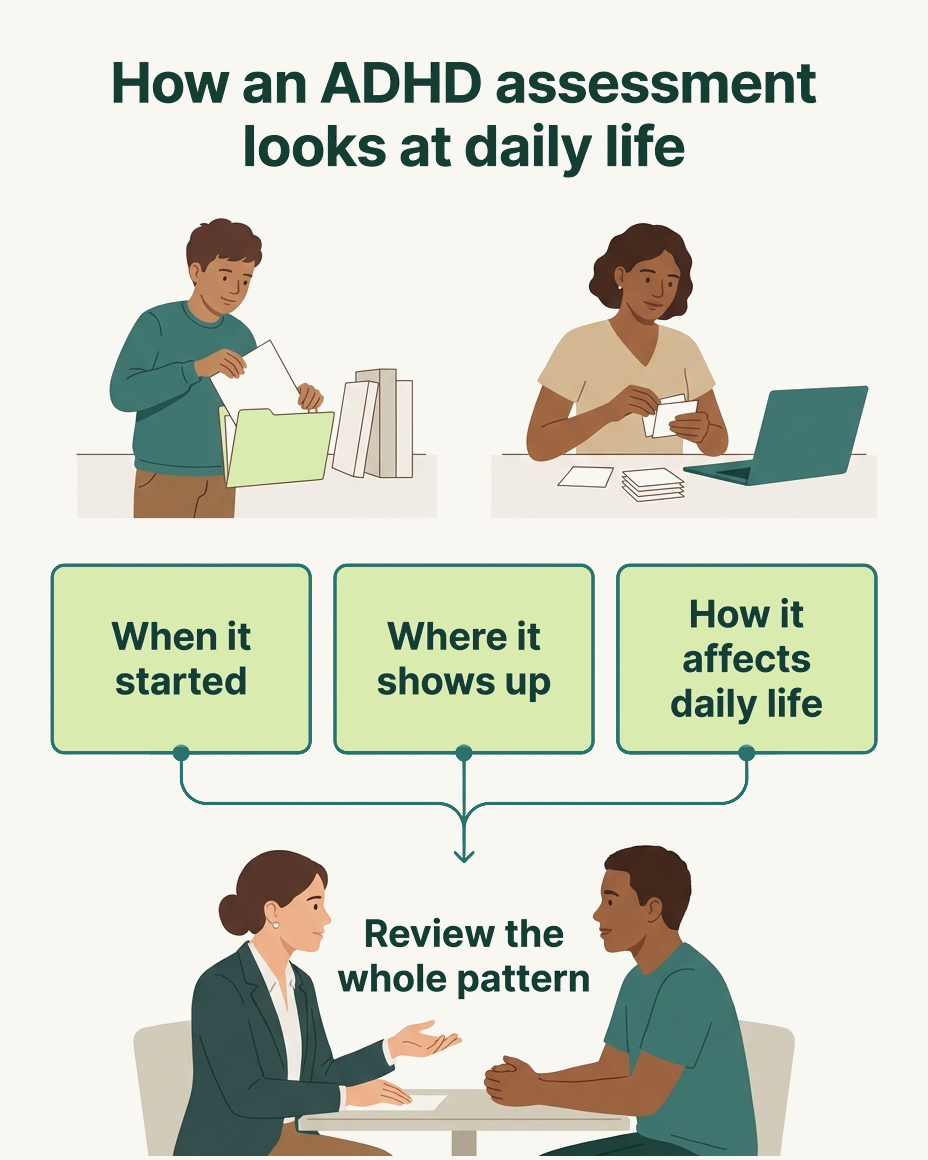
Support can include routines, accommodations, therapy and a medication discussion. If medication is considered, ask your prescriber about benefits, side effects, sleep, appetite and how follow-up will work. Speak with the prescriber before changing a prescription.
Canadian ADHD practice guidelinesSchool, work and home
Try a short picture checklist for getting ready. Ask the teacher about written steps, movement breaks and a predictable place for school materials.
Put deadlines in one place and set a reminder to start. Ask the school or campus accessibility office about supports and what documentation it needs.
Ask for priorities in writing. Try a recurring calendar block for paperwork or agree on who will handle a household task and when.
Prepare for an assessment
Describe what you’ve noticed and bring a summary to your clinician. You can answer about your symptoms now or about your childhood.
Your answers stay in this tab. Refreshing or closing it clears them. Copy or print your summary when you’re ready.
ADHD items from the CADDRA ADHD Checklist, March 2014. View the original form
Prepare for a visit
Choose what you’ve noticed in yourself or in someone you care for. Selections stay in this tab until you reload. Copy the note when you’re ready, then add an example in your own words.
Bring a medication and supplement list, one or two examples from daily life, and any relevant school records or previous reports you have. Tell your clinician if records are hard to find.
Resources
